


Flexible OLED Screen Supplier: Key Factors for Choosing a Reliable Manufacturer
For wholesalers, distributors, repair businesses, refurbishment companies, importers, and replacement-parts brands, choosing a Flexible OLED screen supplier involves more than comparing prices. Model coverage, OLED configuration, quality consistency, supply capability, and relevant industry experience can all affect long-term sourcing.
Before comparing suppliers, it is also important to understand how Flexible OLED and Soft OLED are used in the replacement-display market. The terms are closely related, but they describe different aspects of the product.
Flexible OLED and Soft OLED: Understanding the Terminology
What Is Flexible OLED?
Flexible OLED is an OLED display technology that uses a flexible substrate rather than a rigid glass substrate. This structure allows the display to be thinner and more adaptable to smartphone designs.
In the replacement-screen market, Flexible OLED mainly describes the display technology and structure.
What Does Soft OLED Mean?
Soft OLED is a common aftermarket term for replacement displays that use a flexible OLED structure.
However, Soft OLED is a product category rather than a complete product specification. Two products sold as Soft OLED can still differ in panel configuration, specifications, construction, and installation characteristics.
Flexible OLED vs. Soft OLED
Flexible OLED and Soft OLED are not two completely separate display technologies.
In the aftermarket market, Soft OLED replacement screens commonly use Flexible OLED technology. The main distinction is how the terms are used:
Flexible OLED describes the display technology and flexible substrate structure.
Soft OLED commonly describes a flexible OLED replacement-screen product in the aftermarket.
The Soft OLED label alone does not define the complete product. Buyers should confirm the actual configuration, specifications, compatibility, and sample performance for each SKU.

Key Factors of a Reliable Flexible OLED Screen Supplier
Industry Experience
Experience with replacement OLED screens matters because different smartphone models have different display and installation requirements.
When evaluating a flexible OLED display manufacturer, check experience with:
iPhone and Samsung replacement screens
Overseas B2B orders
Product specifications and sample testing
Model-specific requirements
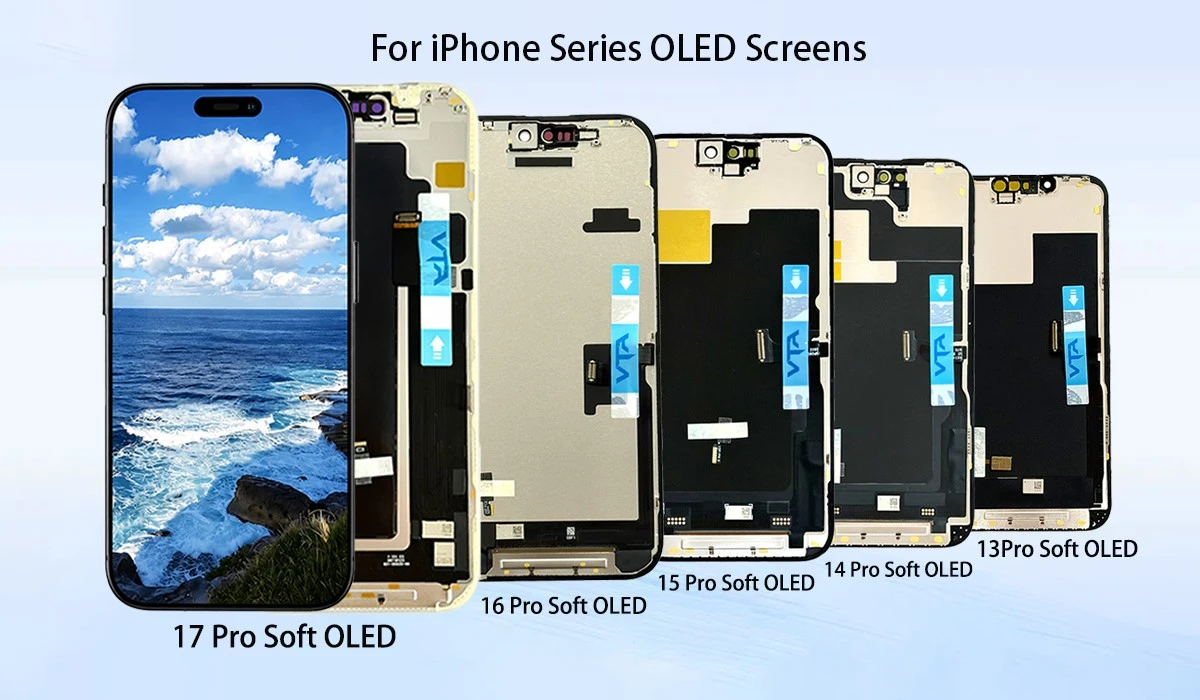
Product and Model Coverage
Ask for the supplier's current model list and confirm whether your required products can be supplied together and replenished regularly.
Check:
iPhone and Samsung models
Standard, Pro, Pro Max, or other versions
Available OLED configurations
Mixed-model orders
Replenishment availability
For wholesalers and distributors, multi-model supply can simplify purchasing and order management.
OLED Technology and Configuration
The same phone model may be available with different replacement-screen configurations, affecting performance, compatibility, and price.
When comparing a soft OLED supplier, confirm:
OLED panel type and source, where applicable
Resolution and refresh rate
Touch performance
Frame or non-frame configuration
Flex cable and connector configuration
For selected models, also confirm technologies such as LTPO and supported refresh rates.
Quality Control and Batch Consistency
A good sample does not automatically prove that later batches will meet the same requirements.
Ask how the supplier controls:
Display performance
Touch sensitivity
Brightness and color consistency
Dead and bright pixels
Flex cable and connector condition
Physical and installation compatibility
For repeat purchasing, the supplier's quality process should be clear and consistent.
Supply Chain and Manufacturing Capability
For buyers looking for an OLED replacement screen wholesale supplier, supply stability matters beyond the first order.
Consider:
Product availability
Lead time
Regular replenishment
Mixed-model supply
Larger-order capability
Repeat-order support
The key question is whether the supplier can support your purchasing cycle from samples to regular replenishment.
OEM and Private Label Support
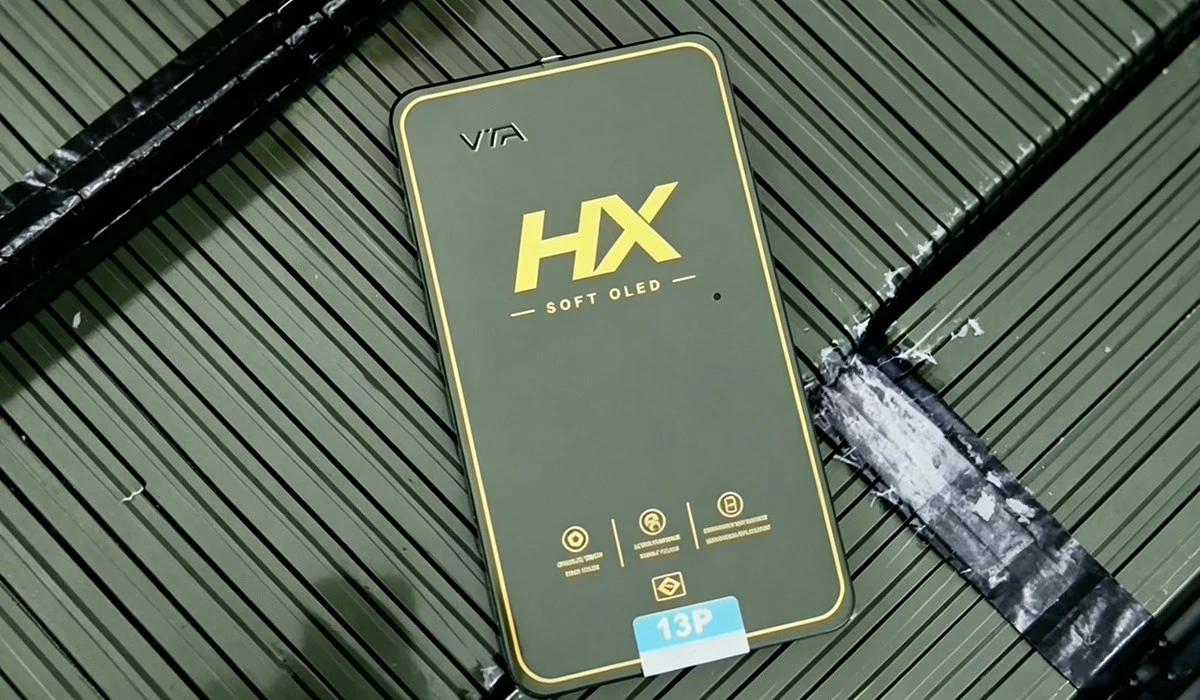
For replacement-parts brands, confirm OEM and private-label requirements before production.
Available options may include:
Logo printing or labeling
Retail packaging
Master carton markings
Shipping marks
Brand-specific labels
Confirm these requirements during quotation and order preparation.
How to Verify a Flexible OLED Screen Manufacturer Before Ordering
Before moving to regular purchasing, verify the supplier through the following checks.
1. Confirm Product Information
Request exact specifications for each model:
Model and version
OLED type
Resolution and refresh rate
Frame or non-frame version
Flex and connector configuration
2. Verify the Quality Process
Ask the supplier what is inspected before shipment and how defects are handled.
Confirm:
Inspection criteria
Display and touch testing
Physical inspection
Defect acceptance requirements
Handling of defective units
3. Check Supply Capability
Before placing a larger order, confirm:
Current availability
Lead time
Replenishment
Mixed-model purchasing
Larger-order arrangements

4. Confirm Key Order Requirements
Provide suppliers with the same purchasing information:
Required models
Estimated quantity
Target market
Shipping destination
Packaging requirements
Expected purchasing frequency
This creates a clearer basis for quotation comparison.
5. Confirm Private-Label Requirements
For own-brand products, discuss:
Logo requirements
Packaging specifications
Product labels
Carton markings
Minimum order requirements
Confirm these details before production rather than making changes after the order has started.
6. Request Samples
Samples allow buyers to evaluate the actual product before committing to a bulk order.
A practical process is:
Sample → Product Testing → Evaluation → Bulk Order

What to Test on a Flexible OLED Replacement Screen
Display Performance
Check for:
Flickering
Visible lines
Abnormal image output
Uneven brightness
Noticeable color shifts
Full-screen black, white, red, green, and blue test images can help identify visible defects.
Pixel Condition
Check for:
Dead pixels
Bright pixels
Dark spots
Localized defects
Touch Performance
Test the center, edges, and corners for missed touches, delayed response, or inconsistent sensitivity.
Physical and Installation Compatibility
Check:
Flex cable
Connector
Screen dimensions
Frame configuration
Fit with the intended device

Flexible OLED Supplier Evaluation Checklist
Before placing a wholesale order, use this checklist to verify the supplier, product, quality, and purchasing conditions:
Model Coverage: Can the supplier provide all required iPhone and Samsung replacement OLED models and versions?
OLED Configuration: Is the OLED type, panel source, resolution, refresh rate, frame option, and connector configuration clearly confirmed?
Product Compatibility: Has the screen been checked for display performance, touch response, and installation compatibility?
Quality Control: Does the supplier have defined inspections for display defects, pixels, touch performance, brightness, color, and connectors?
Batch Consistency: Can the supplier maintain consistent product quality across repeat orders?
Supply Capability: Are current availability, lead time, mixed-model orders, and regular replenishment clearly confirmed?
Sample Testing: Can samples be tested before moving to a wholesale or bulk order?
OEM / Private Label: Are logo, packaging, labeling, and carton requirements confirmed before production?
Order Terms: Are quantity, shipping destination, packaging requirements, and purchasing frequency clearly defined?
FAQ
Q: What is the difference between a Flexible OLED supplier and a manufacturer?
A: A supplier may source products from one or more manufacturers, while a manufacturer produces the screens directly. Buyers should confirm the supplier's actual role and supply arrangements.
Q: Why can the same phone model have different replacement screens?
A: The same model may have different OLED technologies, panel sources, configurations, frame options, or quality levels. Confirm the exact configuration before comparing products or prices.
Q: Can one supplier support multiple Flexible OLED models?
A: Some suppliers can provide multiple iPhone and Samsung replacement OLED models. Confirm the model list, availability, and mixed-model ordering options.
Q: Should I test samples before buying wholesale replacement screens?
A: Yes. Sample testing allows buyers to check display performance, touch response, physical compatibility, and other requirements before placing a larger order.